
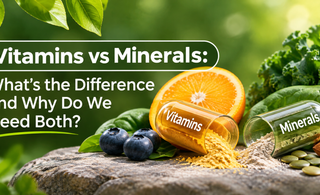
Vitamins and minerals are essential nutrients that play an important role in keeping our bodies functioning normally. From supporting the immune system to maintaining healthy bones and contributing to energy metabolism, both are vital parts of a balanced diet.
But what exactly is the difference between vitamins and minerals, and why does your body need both?
What Are Vitamins?
Vitamins are organic compounds that the body needs in small amounts to support a wide range of normal bodily functions.
There are 13 essential vitamins, each with its own role in maintaining normal health and wellbeing.
Some key examples include:
-
Vitamin C: Contributes to the normal function of the immune system and helps reduce tiredness and fatigue.
-
Vitamin D: Contributes to the maintenance of normal bones, teeth and muscle function.
-
Vitamin B12: Contributes to normal energy-yielding metabolism and helps reduce tiredness and fatigue.
Vitamins are generally divided into two categories: water-soluble vitamins, including vitamin C and the B vitamins, and fat-soluble vitamins, including vitamins A, D, E and K.
What Are Minerals?
Unlike vitamins, minerals are inorganic elements that originate naturally from the earth. They enter our food supply through soil, water, plants and animals.
Minerals are essential for many normal bodily processes, including maintaining bones, supporting muscle function and transporting oxygen around the body.
Some important minerals include:
-
Calcium: Needed for the maintenance of normal bones and teeth.
-
Magnesium: Contributes to normal muscle function and normal energy-yielding metabolism.
-
Iron: Contributes to normal oxygen transport in the body and the reduction of tiredness and fatigue.
-
Zinc: Contributes to the normal function of the immune system and the maintenance of normal skin, hair and nails.
Vitamins vs Minerals: What's the Main Difference?
Although vitamins and minerals work together to support normal bodily functions, their chemical structures and origins are different.
Vitamins are organic compounds that can be produced by living organisms. They can also be affected by heat, light and food preparation.
Minerals are inorganic elements found naturally in soil and water. Unlike vitamins, minerals retain their chemical identity during cooking, although some may be lost into cooking water.
Both are essential, and neither can replace the other.
Why Does Your Body Need Both?
Your body relies on a variety of vitamins and minerals to carry out everyday functions.
For example, vitamin D contributes to the normal absorption and utilisation of calcium, while vitamin C increases iron absorption.
Eating a varied, balanced diet is an important way to obtain the nutrients your body needs. Foods such as fruit, vegetables, wholegrains, dairy products, nuts, seeds and other protein sources can provide a wide range of vitamins and minerals.
However, nutritional requirements can vary depending on factors such as age, diet and lifestyle. Food supplements can be a convenient way to complement your daily nutritional intake where appropriate.
Explore Vitamins & Minerals at Power Health
At Power Health, we offer a range of vitamin and mineral supplements designed to complement a balanced diet and support your nutritional needs.
Discover some of our popular options:
A convenient way to combine a selection of essential vitamins and minerals in one supplement.
Vitamin D contributes to the maintenance of normal bones, teeth and muscle function, as well as the normal function of the immune system.
Magnesium contributes to normal muscle function, normal energy-yielding metabolism and the reduction of tiredness and fatigue.
Find the Right Nutritional Support for You
Whether you're looking to complement your everyday nutrition or explore individual vitamins and minerals, Power Health offers a range of supplements to suit different nutritional needs.
Explore the Power Health Vitamins & Minerals range today and discover our selection of quality nutritional supplements.
Food supplements should not be used as a substitute for a varied, balanced diet and a healthy lifestyle.